
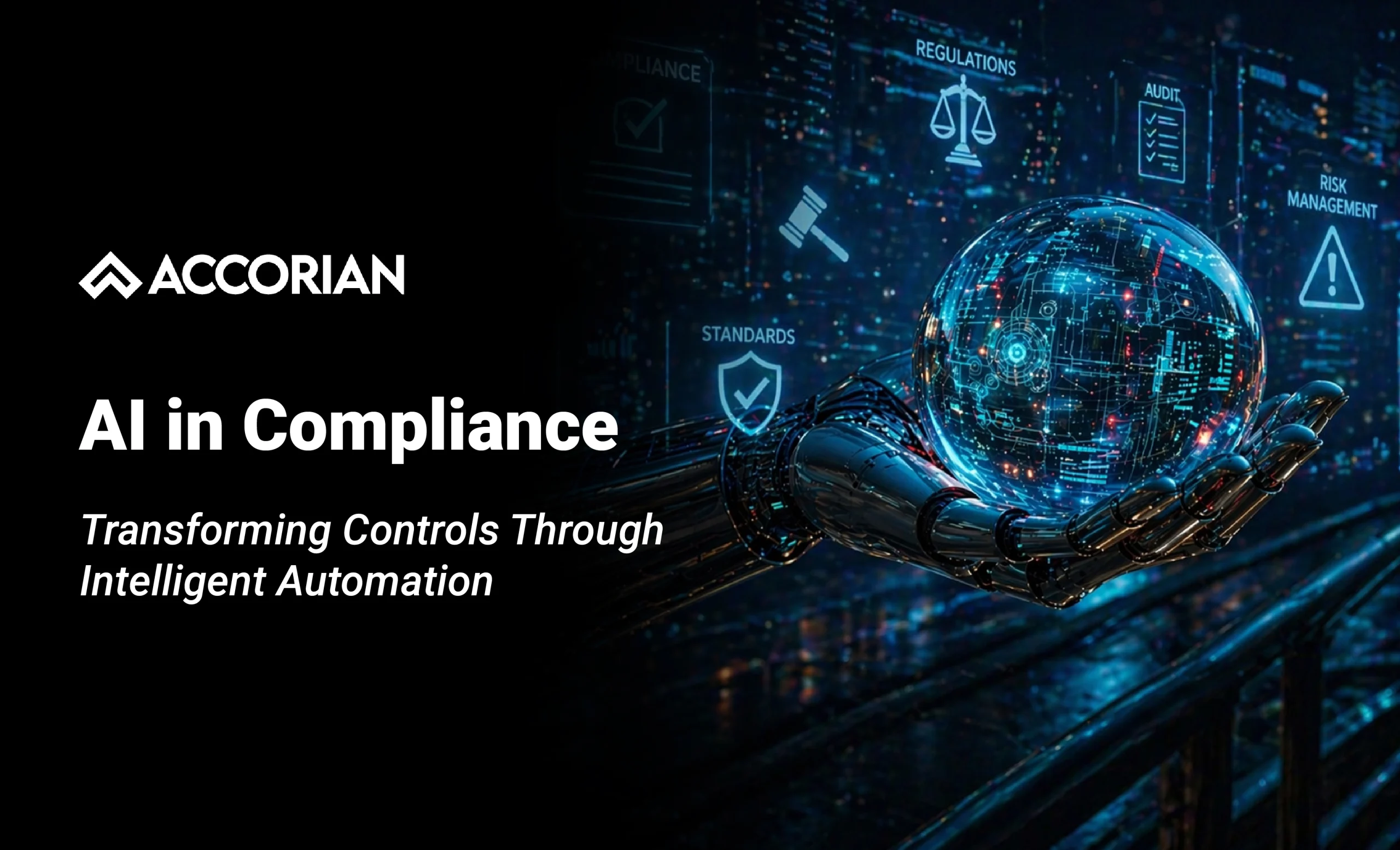
Artificial Intelligence is no longer an experimental capability in Governance, Risk, and Compliance (GRC); it is becoming the operating layer that powers modern compliance programs. As organizations face expanding regulatory obligations, rising audit complexity, and increasingly sophisticated cyber threats, AI is transforming compliance from a reactive, checklist-driven function into a continuous, intelligent, and predictive discipline.
Traditional compliance models rely heavily on manual evidence collection, periodic assessments, spreadsheet-based tracking, and human-intensive audits. AI changes that equation by automating control monitoring, accelerating risk detection, and enabling real-time decision-making.
In 2026, the conversation has shifted from “Should we use AI in compliance?” to “How do we govern AI while leveraging it to scale compliance operations?”
The Growing Need for AI in Compliance
The compliance burden is increasing across industries:
- The European Union AI Act is introducing strict obligations around AI systems, transparency, and risk classification.
- The Cyber Resilience Act mandates secure-by-design and lifecycle cybersecurity controls for digital products.
- Frameworks such as NIST AI RMF, ISO 42001, AICPA SOC 2, HITRUST, and PCI Security Standards Council DSS are evolving rapidly.
At the same time, organizations are struggling operationally:
- 58% of organizations say AI is deeply embedded in operational and decision-making structures, but only 19% have a complete AI governance framework in place.
- 55% of security teams report insufficient bandwidth due to understaffing.
- Nearly half of enterprise applications are expected to include task-specific AI agents by 2026.
This creates an urgent need for intelligent automation, not only to maintain compliance but to scale it.
What Is Intelligent Automation in Compliance?
Intelligent automation combines multiple technologies:
- Artificial Intelligence (AI): Pattern recognition, anomaly detection, and prediction
- Machine Learning (ML): Continuous learning from historical evidence and control outcomes
- Robotic Process Automation (RPA): Repetitive rule-based tasks like evidence collection and reminders
- Natural Language Processing (NLP): Policy review, regulatory interpretation, and document analysis
- Generative AI: Drafting policies, generating reports, summarizing findings, and answering audit questions
How AI Is Transforming Compliance Controls
- Continuous Control Monitoring: Traditional controls are tested quarterly or annually. AI enables real-time control monitoring. Instead of point-in-time evidence, compliance teams gain live assurance.
- Automated Evidence Collection: Evidence collection is one of the most manual aspects of audits. AI and automation can pull screenshots, logs, and system reports automatically, map evidence to multiple frameworks, and eliminate duplicate work across SOC 2, ISO 27001, HIPAA, and PCI DSS. This significantly reduces audit preparation time.
- Risk-Based Prioritization: AI helps prioritize issues by severity and business impact. Instead of reviewing thousands of alerts manually, AI can correlate incidents across systems, assign risk scores, and escalate only material findings. This reduces alert fatigue and improves response efficiency.
- Regulatory Change Monitoring: Regulations evolve continuously across jurisdictions. AI-powered tools can scan regulatory updates, compare changes to internal controls, and recommend remediation actions. This is especially valuable for multinational organizations.
- AI-Powered Internal Audits: AI can accelerate internal audits by sampling larger datasets, detecting outliers in transactions, identifying policy exceptions, and generating draft audit observations. This improves audit depth and speed.
- Third-Party Risk Management: Vendors remain a major risk vector. AI can continuously assess financial health, security posture, breach history, and compliance certifications. This shifts vendor reviews from annual assessments to ongoing monitoring.
Emerging Trends in AI-Powered Compliance (2026)
1. Agentic AI in Compliance: AI is evolving from assistant to operator. Agentic AI systems can:
- Request evidence
- Follow up with stakeholders
- Escalate exceptions
- Trigger workflows autonomously
These systems still require human oversight, but they dramatically reduce operational overhead.
2. AI Security Posture Management (AI-SPM): AI-SPM is emerging as a new security layer. It provides visibility into:
- AI applications
- Copilots and agents
- Prompt injection attempts
- Unauthorized AI usage
As organizations adopt more LLM-based systems, AI-SPM will become critical.
3. Explainable AI (XAI): Compliance teams and regulators need explainability. Organizations are prioritizing:
- Transparent decision models
- Audit trails for AI outputs
- Justification logs for risk decisions
This is essential for regulated industries.
4. AI Compliance Copilots: Copilots are assisting teams by:
- Answering framework-specific questions
- Recommending controls
- Generating policy drafts
- Summarizing gaps
They act as force multipliers for lean compliance teams.
5. Cross-Framework Harmonization: AI can map one control across multiple frameworks. Example:
A single access control policy may satisfy parts of:
- SOC 2
- ISO 27001
- HIPAA
- PCI DSS
This reduces redundancy and streamlines audits.
Benefits of AI in Compliance
Organizations using AI-driven compliance programs can achieve:
- Faster Audit Readiness: Automated evidence collection reduces preparation timelines from months to weeks.
- Lower Compliance Costs: Reduced manual effort lowers operational costs.
- Improved Accuracy: AI reduces human errors in tracking and reporting.
- Better Risk Visibility: Continuous monitoring surfaces issues earlier.
- Scalability: Compliance programs can expand without proportional headcount increases.
- Stronger Decision-Making: Predictive insights enable proactive action.
Challenges and Risks
Despite the benefits, AI introduces new challenges.
- Governance Gaps: Many organizations deploy AI faster than governance frameworks mature.
- Bias and Inaccuracy: Poorly trained models may create false positives or false negatives.
- Lack of Explainability: Opaque models create regulatory concerns.
- Data Privacy Risks: AI tools processing sensitive data can create privacy violations.
- Over-Reliance on Automation: Human oversight remains critical.
Best Practices for Implementing AI in Compliance
To implement AI responsibly:
- Build an AI Governance Framework: Define policies for AI usage, approvals, accountability, and oversight.
- Start with High-Impact Use Cases: Begin with evidence collection, control monitoring, or policy analysis.
- Keep Humans in the Loop: Use AI for recommendations; keep final decisions with experts.
- Ensure Auditability: Maintain logs, rationale, and evidence trails.
- Align with Existing Frameworks: Map AI governance to NIST AI RMF, ISO 42001, and internal controls.
- Monitor Model Performance: Continuously evaluate accuracy and drift.
The Future of Compliance Is Autonomous, but Governed
The next generation of compliance programs will not rely on spreadsheets and periodic audits. They will be continuous, intelligent, and increasingly autonomous.
AI will not replace compliance professionals. It will elevate them from administrators, chasing evidence, to strategic advisors managing risk proactively.
The organizations that win will be those that:
- Embed AI into compliance workflows
- Govern AI usage responsibly
- Automate intelligently without sacrificing oversight
In 2026 and beyond, compliance will no longer be a back-office obligation—it will become a real-time business enabler powered by intelligent automation.